Automatic Tide
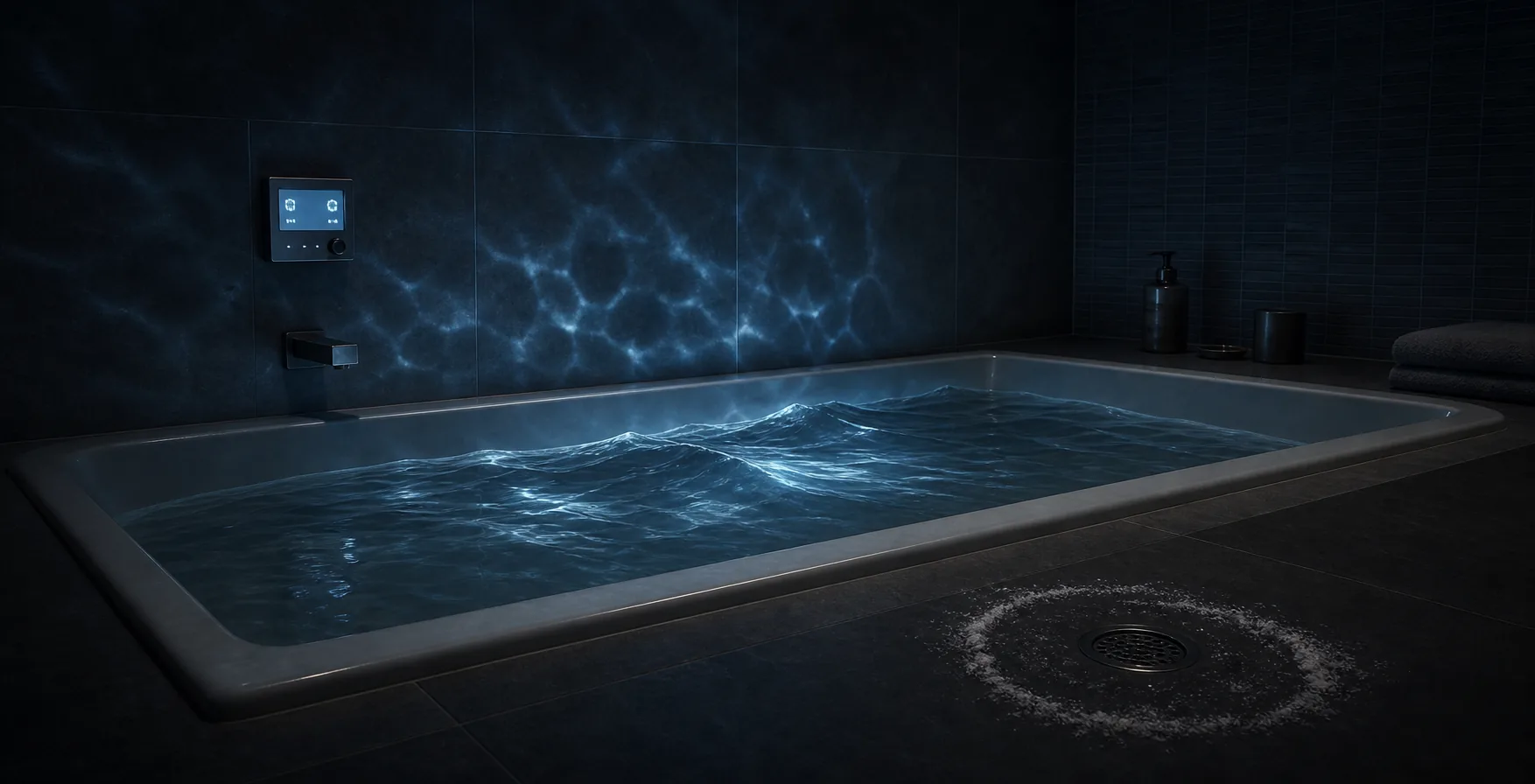
When I got home, the bathroom control panel was already lit.
I did not remember setting the tub. Still, a message waited on the screen:
“Automatic tide started.”
The bath was half full. There was no steam. Instead, the surface rose and fell in a slow, deliberate rhythm. The room had no window, but a blue light moved across the tiles like night water against a seawall.
I was tired enough not to question it.
After a shower, I stepped into the tub. The water was a little cold at first. By the time it reached my shoulders, it had warmed to match my body. Somewhere inside my ears, I heard a small, private surf.
I closed my eyes.
The day came back in pieces. An email left open. A document closed before I had finished reading it. A short message I had not answered. I could not remember what lunch had tasted like, but I could see the crease in the receipt with unnecessary clarity.
The water rose.
Each time it did, some minor detail seemed to drift farther away: the shoes of the person beside me in the elevator, the second hand of the meeting room clock, the white temporary wall around roadwork on my way home.
What remained was a voice from the morning.
“Later,” I had said to someone.
I could not remember who.
The panel gave a soft tone.
“Today’s memory has been adjusted to the optimal depth.”
I laughed in the tub. I was sure that feature had not been in the manual.
When I got out, the floor was perfectly dry. Only the towel carried a faint smell of salt. Around the drain, a thin white ring had appeared.
In the bedroom, my phone showed a notification from the home-management app.
“Today’s fatigue has been saved.”
Below it, in smaller text:
“Unnecessary events will recede by morning.”
And in the morning, my body did feel lighter.
But at the front door, I stopped for a while with my hand on the knob. I had the strange feeling that I had promised someone something, and that the tide had taken just enough of it away.